

Mixed-use buildings can be great investments, but they also get discounted quickly when leases aren’t structured properly. Buyers look very closely at mixed-use leases because one poorly

Dated: April 30 2026
Views: 71
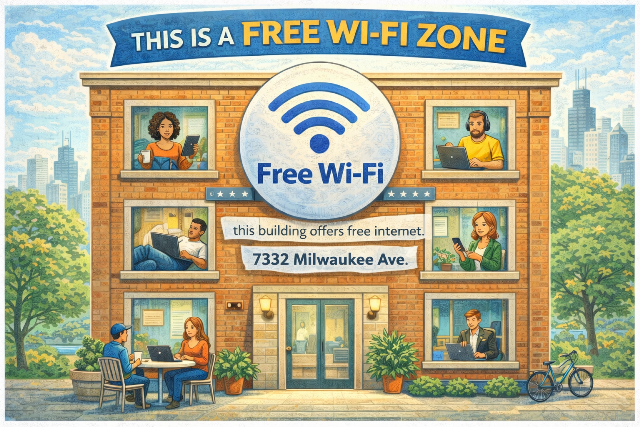
More landlords are asking whether offering free internet as part of the rent actually adds value to a property, or whether it simply adds another monthly expense. It’s a fair question, especially when operating costs are rising and margins feel tighter than they used to.
In many cases, the value isn’t flashy or obvious. It shows up quietly, in how easy the building is to rent, how stable the income becomes, and how the numbers look when a buyer eventually evaluates the property.
For most tenants today, reliable internet is no longer optional. It’s something they expect to have immediately. When internet is included, there’s no setup, no installation appointment, and no separate bill to manage. That convenience removes friction, and friction is often what causes leasing delays or pushes tenants to move elsewhere.
From a cost standpoint, bulk internet pricing is usually lower than what tenants would pay individually. A common example might be an owner paying about $40 per unit per month for building-wide service. In a six-unit building, that comes out to roughly $240 per month, or just under $3,000 per year.
On its own, that looks like a new expense. But the question isn’t whether there’s a cost — it’s what that cost changes.
If including internet allows rents to be just $50 higher per unit, that’s an extra $300 per month, or $3,600 per year. After paying for the internet, there’s still about $600 left over annually. That money drops straight to the bottom line as additional net operating income.
This is where the buyer and seller perspectives really matter.
From a seller’s standpoint, buyers don’t value buildings based on features — they value them based on net income. Even small, consistent increases in NOI can support a higher sale price. That extra $600 a year isn’t just extra cash flow. It becomes part of the income stream a buyer is purchasing.
To put that into plain English, here’s how cap rates come into play.
If a buyer is using a 7% cap rate, they’re essentially saying that every dollar of net income supports about $14 in value. In that case, an extra $600 in annual NOI can support roughly $8,500–$8,600 more in value. At an 8% cap rate, that same $600 supports about $7,500 in value.
The exact number isn’t the point. The concept is.
Small, reliable increases in net income get multiplied when a building is valued.
From a buyer’s perspective, the appeal is stability. Buyers are increasingly cautious about vacancy, turnover, and future rent increases. A building where internet is already included — and already baked into the rent — feels easier to operate. The buyer isn’t relying on a future rent increase that “should” happen. The income is already there, flowing cleanly to the bottom line.
Even in situations where rent isn’t raised at all, the math can still work. Avoiding just one vacant month on a single unit can offset several months of internet cost. Lower turnover means less lost rent, fewer make-ready expenses, and less time spent re-leasing units. Those savings don’t always show up neatly in a spreadsheet, but experienced buyers understand their impact.
There are also operational benefits that are easy to overlook. When the building provides internet, there’s less repeated wiring, fewer service calls between tenants, and fewer disruptions during move-ins and move-outs. Over time, that keeps the building cleaner and easier to manage, which indirectly supports value.
Of course, this approach only works when the numbers make sense. If internet costs $60 per unit and the local market won’t support higher rent, the benefit disappears. The owner also takes on responsibility for service quality and outages, which needs to be factored into the decision.
Like most value-add ideas, offering free internet isn’t about chasing trends. It’s about whether a modest, controllable expense can improve income stability and make the building more attractive to both tenants and buyers.
The real question isn’t whether tenants like free internet. They do.
The real question is whether it improves net income in a way that buyers recognize and value.
If you’re considering offering internet as part of the rent — whether to improve performance now or to position the building better for a future sale — I’m always happy to walk through the numbers with you and give you a straightforward opinion on whether it pencils out.
Disclaimer: This blog is for informational purposes only and does not constitute legal advice.
Get these articles delivered free to your inbox:
Mixed-use buildings can be great investments, but they also get discounted quickly when leases aren’t structured properly. Buyers look very closely at mixed-use leases because one poorly
For many long-time apartment owners, retirement doesn’t start with the question “How much is my building worth?” It starts with a different one: Do I really want to keep doing this
When buyers or lenders talk about an environmental study, they’re usually referring to a process that can unfold in up to three phases. Not every property goes through all three. In fact, most
Security cameras have quietly become one of the more practical upgrades a property owner can make. They’re no longer just about recording incidents after the fact. When used correctly, they
 Midwest Real Estate Data (MRED) All information deemed reliable but not guaranteed. All properties are subject to prior sale, change or withdrawal. Neither listing broker(s) or information provider(s) shall be responsible for any typographical errors, misinformation, misprints and shall be held totally harmless. Listing(s) information is provided for consumer's personal, non-commercial use and may not be used for any purpose other than to identify prospective properties consumers may be interested in purchasing. The data relating to real estate for sale on this website comes in part from the Internet Data Exchange program of the Multiple Listing Service. Real estate listings held by brokerage firms other than Weichert, Realtors® - All Pro - Park Ridge may be marked with the Internet Data Exchange logo and detailed information about those properties will include the name of the listing broker(s) when required by the MLS. Copyright ©2026 All rights reserved.Based on information submitted to the MLS GRID as of September 12, 2026 8:30 PM UTC All data is obtained from various sources and may not have been verified by broker or MLS GRID. Supplied Open House Information is subject to change without notice.
Data is updated as of September 12, 2026 8:30 PM UTC
Midwest Real Estate Data (MRED) All information deemed reliable but not guaranteed. All properties are subject to prior sale, change or withdrawal. Neither listing broker(s) or information provider(s) shall be responsible for any typographical errors, misinformation, misprints and shall be held totally harmless. Listing(s) information is provided for consumer's personal, non-commercial use and may not be used for any purpose other than to identify prospective properties consumers may be interested in purchasing. The data relating to real estate for sale on this website comes in part from the Internet Data Exchange program of the Multiple Listing Service. Real estate listings held by brokerage firms other than Weichert, Realtors® - All Pro - Park Ridge may be marked with the Internet Data Exchange logo and detailed information about those properties will include the name of the listing broker(s) when required by the MLS. Copyright ©2026 All rights reserved.Based on information submitted to the MLS GRID as of September 12, 2026 8:30 PM UTC All data is obtained from various sources and may not have been verified by broker or MLS GRID. Supplied Open House Information is subject to change without notice.
Data is updated as of September 12, 2026 8:30 PM UTC
33. Required DMCA Notice
The Digital Millennium Copyright Act of 1998, 17 U.S.C. §512, the DMCA, provides recourse for copyright owners who believe that material appearing on the Internet infringes their rights under U.S. copyright law. If you believe in good faith that any content or material made available in connection with our website or services infringes your copyright, you (or your agent) may send us a notice requesting that the content or material be removed, or access to it blocked. Notices must be sent in writing by email to DMCAnotice@MLSGrid.com. The DMCA requires that your notice of alleged copyright infringement include the following information: (1) description of the copyrighted work that is the subject of claimed infringement; (2) description of the alleged infringing content and information sufficient to permit us to locate the content; (3) contact information for you, including your address, telephone number and email address; (4) a statement by you that you have a good faith belief that the content in the manner complained of is not authorized by the copyright owner, or its agent, or by the operation of any law; (5) a statement by you, signed under penalty of perjury, that the information in the notification is accurate and that you have the authority to enforce the copyrights that are claimed to be infringed; and (6) a physical or electronic signature of the copyright owner or a person authorized to act on the copyright owners behalf. Failure to include all of the above information may result in the delay of the processing of your complaint.
Copyright © 2026 Midwest Real Estate Data LLC. Data is updated as of September 12, 2026 8:30 PM UTC