

Mixed-use buildings can be great investments, but they also get discounted quickly when leases aren’t structured properly. Buyers look very closely at mixed-use leases because one poorly

Dated: September 9 2026
Views: 7
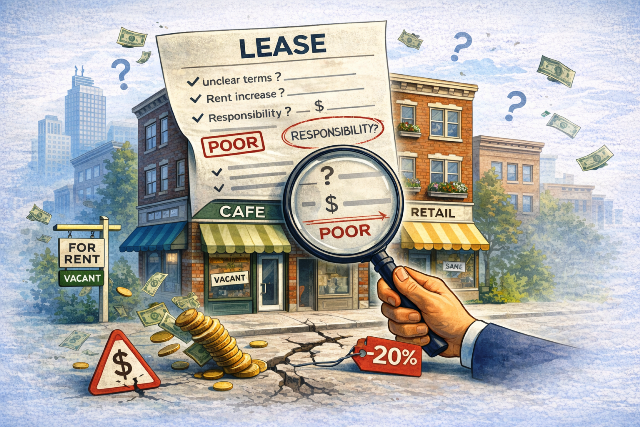
Mixed-use buildings can be great investments, but they also get discounted quickly when leases aren’t structured properly. Buyers look very closely at mixed-use leases because one poorly written commercial lease can outweigh the income from multiple residential units.
Most of the value loss doesn’t come from vacancy. It comes from lease terms that create uncertainty, limit flexibility, or lock the next owner into a bad position.
One of the biggest mistakes owners make is using residential-style leases for commercial tenants. Commercial tenants operate differently. They need clear terms for rent escalations, responsibility for utilities, maintenance, insurance, and build-out obligations. When these items are vague or missing, buyers assume the worst and price in risk.
Another common issue is poorly structured rent escalations. Long-term commercial leases with flat rent and no increases hurt value over time. Buyers expect rent to grow. If a lease runs five or ten years with no built-in increases, the income quickly falls behind the market. Even modest, predictable escalations are better than none.
Renewal terms are another frequent problem. Automatic renewals at pre-set rents often favor the tenant and limit the owner’s flexibility. Buyers dislike leases where they can’t adjust rent or re-position the space without waiting years. Renewal options should be clear, limited, and priced thoughtfully.
Expense responsibility is another area where mistakes are common. Leases that don’t clearly state who pays for utilities, maintenance, repairs, and common areas create confusion. In mixed-use buildings, buyers want certainty. If it’s unclear whether the commercial tenant pays their share, buyers assume the owner does — and discount the property accordingly.
Many owners also underestimate how much tenant concentration matters. When one commercial tenant represents a large portion of the building’s income, buyers look closely at lease strength. Short terms, weak credit, or unfavorable renewals increase risk. Strong leases can stabilize a building; weak ones can cap value.
Another mistake is not updating leases over time. As markets change, leases should evolve. Outdated terms that no longer reflect current operating realities make a building feel neglected and harder to underwrite.
Finally, some owners wait too long to review leases before selling. By the time a property is on the market, it’s often too late to fix unfavorable terms. Buyers see what’s written, not what an owner intended.
The takeaway is simple. In mixed-use buildings, leases don’t just define income — they define risk. Clear terms, reasonable escalations, and flexible renewals make a property easier to value and easier to sell. Poorly written or outdated leases do the opposite.
If you own a mixed-use building and plan to sell in the future, reviewing lease terms sooner rather than than later can preserve value and widen the buyer pool. Small changes made early often prevent big discounts later. If you’d like help reviewing your mixed-use leases through a buyer’s lens, I’m always happy to walk through them with you and give you my straightforward opinion.
Get these articles delivered free to your inbox:
Mixed-use buildings can be great investments, but they also get discounted quickly when leases aren’t structured properly. Buyers look very closely at mixed-use leases because one poorly
For many long-time apartment owners, retirement doesn’t start with the question “How much is my building worth?” It starts with a different one: Do I really want to keep doing this
When buyers or lenders talk about an environmental study, they’re usually referring to a process that can unfold in up to three phases. Not every property goes through all three. In fact, most
Security cameras have quietly become one of the more practical upgrades a property owner can make. They’re no longer just about recording incidents after the fact. When used correctly, they
 Midwest Real Estate Data (MRED) All information deemed reliable but not guaranteed. All properties are subject to prior sale, change or withdrawal. Neither listing broker(s) or information provider(s) shall be responsible for any typographical errors, misinformation, misprints and shall be held totally harmless. Listing(s) information is provided for consumer's personal, non-commercial use and may not be used for any purpose other than to identify prospective properties consumers may be interested in purchasing. The data relating to real estate for sale on this website comes in part from the Internet Data Exchange program of the Multiple Listing Service. Real estate listings held by brokerage firms other than Weichert, Realtors® - All Pro - Park Ridge may be marked with the Internet Data Exchange logo and detailed information about those properties will include the name of the listing broker(s) when required by the MLS. Copyright ©2026 All rights reserved.Based on information submitted to the MLS GRID as of September 12, 2026 8:30 PM UTC All data is obtained from various sources and may not have been verified by broker or MLS GRID. Supplied Open House Information is subject to change without notice.
Data is updated as of September 12, 2026 8:30 PM UTC
Midwest Real Estate Data (MRED) All information deemed reliable but not guaranteed. All properties are subject to prior sale, change or withdrawal. Neither listing broker(s) or information provider(s) shall be responsible for any typographical errors, misinformation, misprints and shall be held totally harmless. Listing(s) information is provided for consumer's personal, non-commercial use and may not be used for any purpose other than to identify prospective properties consumers may be interested in purchasing. The data relating to real estate for sale on this website comes in part from the Internet Data Exchange program of the Multiple Listing Service. Real estate listings held by brokerage firms other than Weichert, Realtors® - All Pro - Park Ridge may be marked with the Internet Data Exchange logo and detailed information about those properties will include the name of the listing broker(s) when required by the MLS. Copyright ©2026 All rights reserved.Based on information submitted to the MLS GRID as of September 12, 2026 8:30 PM UTC All data is obtained from various sources and may not have been verified by broker or MLS GRID. Supplied Open House Information is subject to change without notice.
Data is updated as of September 12, 2026 8:30 PM UTC
33. Required DMCA Notice
The Digital Millennium Copyright Act of 1998, 17 U.S.C. §512, the DMCA, provides recourse for copyright owners who believe that material appearing on the Internet infringes their rights under U.S. copyright law. If you believe in good faith that any content or material made available in connection with our website or services infringes your copyright, you (or your agent) may send us a notice requesting that the content or material be removed, or access to it blocked. Notices must be sent in writing by email to DMCAnotice@MLSGrid.com. The DMCA requires that your notice of alleged copyright infringement include the following information: (1) description of the copyrighted work that is the subject of claimed infringement; (2) description of the alleged infringing content and information sufficient to permit us to locate the content; (3) contact information for you, including your address, telephone number and email address; (4) a statement by you that you have a good faith belief that the content in the manner complained of is not authorized by the copyright owner, or its agent, or by the operation of any law; (5) a statement by you, signed under penalty of perjury, that the information in the notification is accurate and that you have the authority to enforce the copyrights that are claimed to be infringed; and (6) a physical or electronic signature of the copyright owner or a person authorized to act on the copyright owners behalf. Failure to include all of the above information may result in the delay of the processing of your complaint.
Copyright © 2026 Midwest Real Estate Data LLC. Data is updated as of September 12, 2026 8:30 PM UTC